Wine Tasting Abroad: Where Indulgence Meets Connection
Reading time: 11 minutes
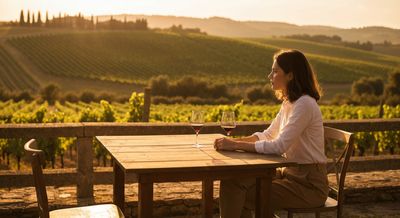
Last September I was standing in a small wine cellar in Montalcino, Tuscany, tasting a 2016 Brunello di Montalcino Riserva, when the woman next to me suddenly said, "Do you smell the violets?" I had no idea which aromas I was supposed to pick out, but that very moment was the start of a wonderful conversation about wine, travel and life. Wine tastings abroad have long become more than just a culinary experience for me. They are a fascinating way to meet people with similar interests and to gain authentic insight into a region.
What I've learned on my travels through Europe's wine regions: the relaxed atmosphere at a professional wine tasting opens doors that stay closed in everyday life. Among oak barrels and vineyards, conversations happen that I would never have in a restaurant or a club. In this article I share my personal experiences and show you how to meet new people at wine tastings without pretending to be someone you're not.
Why Wine Tastings Are Perfect Places for Genuine Encounters
Wine tastings create a unique situation. Everyone taking part shares at least one interest: wine and the culture behind it. Unlike classic bars or clubs, the focus isn't on a party mood but on real curiosity. According to a 2023 study by the German Wine Institute, 42 percent of German wine tourists take part in tastings to meet new people with similar interests.
At the Planeta winery in Sicily, near Menfi, I experienced exactly that. The group had eight people, including a couple from Chicago, two solo travelers from Canada and me. While we were tasting a Cerasuolo di Vittoria, a conversation about sustainable wine production unfolded. The winemaker talked about organic farming, and suddenly we were all discussing mindful consumption and responsible travel. You rarely reach that depth in small talk at the hotel bar.
Meeting new people at wine tastings also works so well because the situation is structured. There's a clear framework, breaks between tastings and a shared topic. That takes the pressure off constantly having to come up with things to talk about. At the same time there's plenty of room for personal conversations, especially when the group strolls through the vineyards or stands together in the sun.
My Favorite Wine Regions for Food Lovers and Sociable Travelers
The most beautiful wine regions for food and wine lovers are often the ones where people are especially open and hospitable. In my experience, three regions top the list when it comes to the combination of excellent wine and warm encounters.
Douro Valley, Portugal
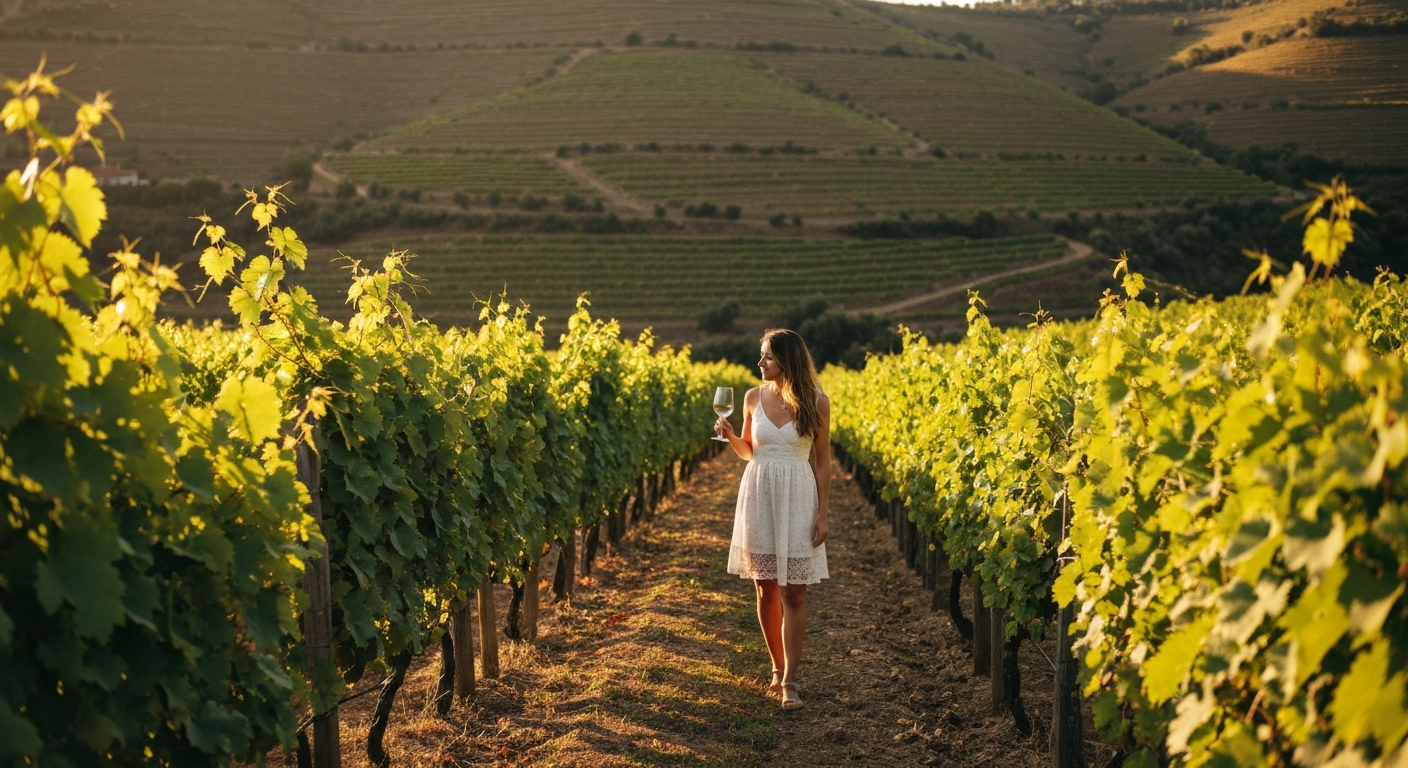
The Douro Valley has been a UNESCO World Heritage Site since 2001 and is a paradise for wine lovers. Not only is the famous port wine produced here, but also outstanding red wines. I visited Quinta do Crasto in Gouvinhas, where I joined a tasting followed by lunch. The group was an international mix, and the relaxed atmosphere on the terrace overlooking the river meant we were chatting in no time. The winery also offers multi-day experiences where you can even help with the grape harvest.
Bordeaux, France
Bordeaux is a classic among Europe's wine regions. In the city itself there is the Cité du Vin, a modern wine museum that offers interactive tastings. I took part in a workshop on "The Wines of the Left Bank," where we tasted five different wines from Médoc and Pauillac. The group had about 15 people, and the sommelier actively encouraged us to share our impressions. After the workshop we met up at a wine bar in the Chartrons district to wind down the evening together.
Wachau, Austria
The Wachau on the Danube is known for its white wines, especially Grüner Veltliner and Riesling. The charming Domäne Wachau winery in Dürnstein regularly offers guided tastings. Here I met a group of solo travelers who had all heard about the event through MySugardaddy. The laid-back atmosphere made it easy to start talking, and we exchanged not only wine recommendations but also travel tips for the region. For travel for singles over 40 who value good food and culture, the Wachau is perfect.
How I Prepare for a Wine Tasting Abroad as a Solo Traveler
If you travel alone to wine tastings, you should prepare a little. I always book in advance, since many wineries offer only limited spots. Platforms like WineToursEurope or regional tourism websites give overviews of dates and prices. A typical tasting with three to five wines costs between $15 and $45, depending on the winery and region.
I find out about the winery's philosophy beforehand. Do they produce organically? Do they have a special story? These details help me ask targeted questions and show genuine interest. At the Bodega Otazu winery in Navarra, Spain, for example, I learned that they have been committed to biodynamic viticulture since 2002. That was a perfect conversation starter with other participants who were also interested in sustainability.
Another tip: I travel with a small notebook where I jot down my impressions. That's not only useful for me, it also shows others that I take the tasting seriously. More than once, other participants got curious and asked about my notes. That led to spontaneous conversations about aromas, growing regions and favorite wines.
Etiquette at Exclusive Wine Tastings
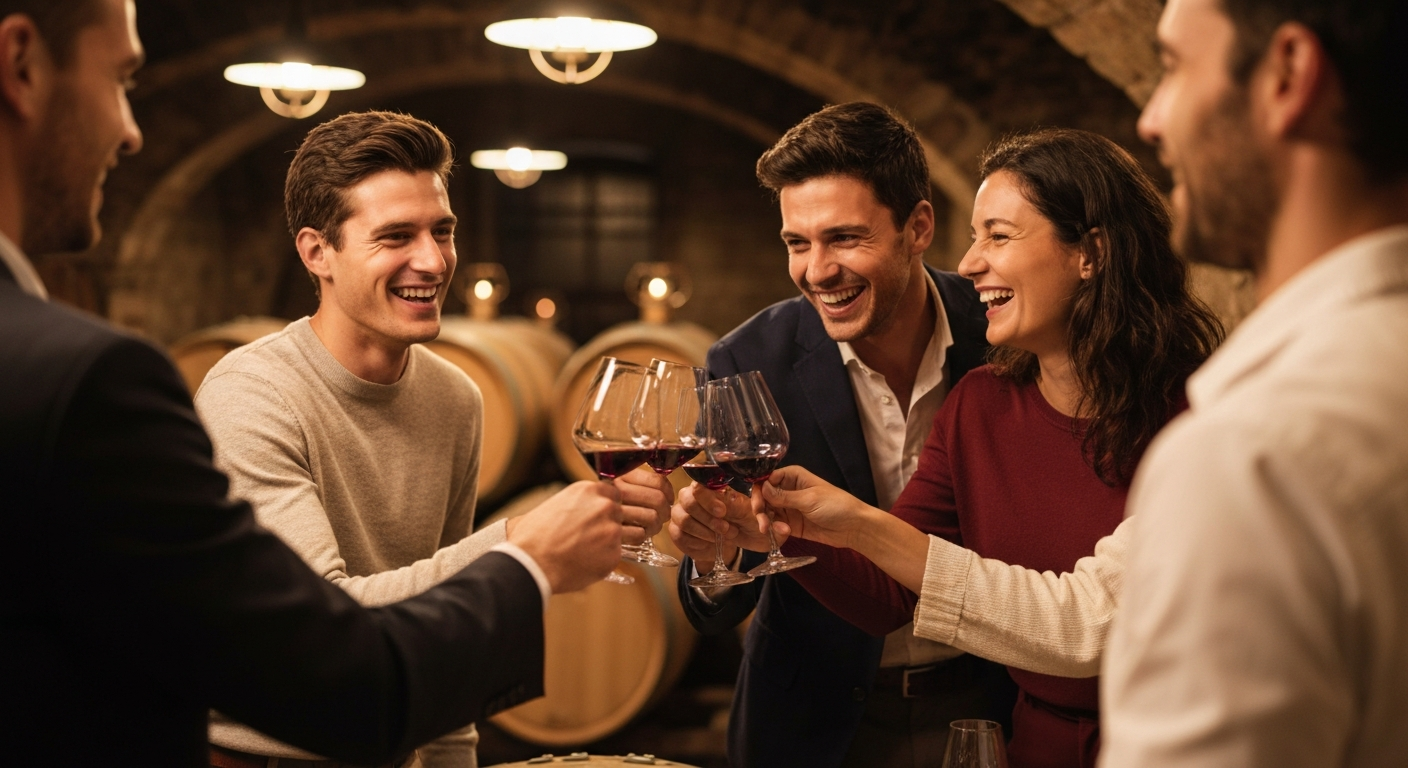
How exactly does a professional wine tasting work? There are a few unwritten rules I've picked up over time. This etiquette not only helps you make a good impression, it also keeps the experience enjoyable for everyone involved.
- Punctuality is crucial. Wine tastings follow a fixed schedule, and arriving late disturbs not only the sommelier but also the other guests.
- Don't wear strong perfume or aftershave. At a tasting at Château Margaux in Bordeaux, the sommelier explicitly asked guests to avoid intense scents because they interfere with perceiving the wine's aromas.
- Listen actively and ask questions, but don't dominate. I always try to strike a balance between my curiosity and the space others need for their questions.
- Don't gulp the wine down. It's about enjoyment and perception, not alcohol consumption. I take small sips and use the spittoons provided, especially when many wines are being tasted.
- Show respect for the winemaker and their work. Criticism is fine, but it should be phrased constructively and respectfully.
Small Talk Without the Clichés
Meeting new people at wine tastings also means having authentic conversations. I avoid standard questions like "Where are you from?" or "What do you do for a living?" Instead, I focus on the shared situation. Questions like "What brought you to this winery?" or "Have you traveled to other wine regions?" work much better. According to a 2024 survey by the German Travel Association (DRV), 68 percent of culinary travelers say they specifically look for experiences where they can meet like-minded people.
At a small winery in the Rheingau region, Weingut Georg Breuer in Rüdesheim, I learned this lesson. I simply asked a woman in her mid-forties which wine she had liked best so far. She told me about a trip to South Africa, and we spent the next half hour talking about international wine culture and her experiences as a solo traveler. That kind of conversation doesn't happen when you rely on ready-made phrases.
Experiencing Wine Culture and Building Connections Along the Way
Experiencing wine culture means more to me than just tasting wine. It's about understanding the story behind every drop, getting to know the people who make it, and taking in the region with all your senses. In Spain's Rioja region I visited the Bodegas Muga winery in Haro. The Muga family has been producing wine since 1932, and the passion with which they spoke about their craft was contagious.
After the tasting, the winemaker invited us to stay a little longer and enjoy tapas together. The planned one-hour tasting turned into a four-hour afternoon full of stories, laughter and new friendships. Two of the participants, a couple from Denver, spontaneously decided to join me the next day to visit the nearby wine village of Laguardia. Moments like these show that wine tastings abroad go far beyond the glass.
For travel for single women, organized wine tastings are especially recommended. They offer a safe setting for making new acquaintances without ending up in unclear situations. Most wineries place great value on a pleasant and respectful atmosphere.
Wine Tourism as a Gateway to Deeper Conversations
Growing wine tourism in Europe offers more and more opportunities to meet people. According to Statista, the European wine tourism market reached a volume of about 5.2 billion euros in 2023. More and more wineries are realizing that travelers don't just want to taste wine, they also look for experiences and connections.
I remember a vineyard tour in Burgundy, France, specifically in the Domaine de la Romanée-Conti area. The tour took us through the famous vineyards of Vosne-Romanée, and our guide told us about the history of the terroir and the region's climatic particularities. In the group was a retired teacher from Portland who was a hobby winemaker himself. His knowledge and enthusiasm made the tour even more interesting, and after the tasting we exchanged contact details to stay in touch.
Encounters like these show that wine tourism isn't just a tourist activity but a way to meet people with real shared interests. For travel for singles over 35 who want more than superficial vacation acquaintances, wine trips are ideal.
My Personal Tips for Unforgettable Wine Tastings
After numerous wine tastings across Europe, I've developed a few practical tips that help me get the most out of these experiences time and again. First, I choose smaller wineries over big commercial operations. The atmosphere is more personal, and the chances of striking up a conversation are higher. Second, I book tastings with tours or workshops, since they offer more interaction than pure tastings.
Third, I pay attention to group size. Groups of six to twelve people are ideal, since they're big enough for variety but small enough for real conversations. Fourth, I plan enough time. Rushing doesn't go with wine culture. I block out at least half a day for a tasting and the conversations that follow.
Another insider tip: at the end of the tasting I ask for recommendations for local restaurants or other wineries. That shows interest in the region and often leads to valuable insider tips. On a winemaker's recommendation in Styria, I visited the restaurant Toni's Vinum in Gamlitz, where I not only ate wonderfully but also met two other solo travelers, and we spent the rest of the evening together.
Frequently Asked Questions About Wine Tastings Abroad
How much does a typical wine tasting in Europe cost?
Prices vary widely depending on the region and winery. A simple tasting with three to five wines costs between $15 and $35. Exclusive tastings at renowned wineries like Château Pichon-Longueville in Bordeaux can cost $90 to $165, but then often include a tour and small bites. In Portugal and Spain, tastings tend to be cheaper than in France or Italy.
Do I have to be a wine expert to take part in professional tastings?
Absolutely not. Most wineries deliberately cater to wine lovers of all levels. At my first tasting I barely knew anything about tannins or acidity, but I learned quickly by listening and asking questions. Sommeliers value genuine interest more than expertise. The only thing that matters is being open and respectful.
Are wine tastings also suitable for younger travelers?
Yes, definitely. According to a 2023 study by the European Travel Commission, the average age of wine tourists in Europe is 38, with a rising trend in the 25 to 35 age group. Many wineries offer more modern formats that appeal to younger audiences, such as tastings with street food or music. In the Penedès wine region in Catalonia, I took part in a sunset tasting with a DJ where the crowd was mostly between 28 and 40 years old.
How do I find wine tastings designed specifically for solo travelers?
Some platforms like Meetup or specialized wine travel providers organize tastings for solo travelers. MySugardaddy also occasionally offers exclusive lifestyle events in wine regions, where enjoyment and relaxed encounters take center stage. Otherwise, it's worth asking wineries directly or checking travel forums like Lonely Planet's Thorn Tree.
What should I keep in mind after a wine tasting if I want to stay in touch with new contacts?
I usually exchange social media contacts or email addresses when a good conversation comes up. The key is to stay authentic and not come across as too pushy. A short message a few days later, thanking them for the lovely afternoon and maybe sharing a photo, has worked well for me. That keeps connections alive without feeling forced.
Conclusion: Wine Tastings as a Gateway to Real Encounters
Wine tastings abroad have become a fixed part of my travels. They combine enjoyment, culture and the chance to meet people who want more than small talk. Whether in the sunny Douro Valley, elegant Bordeaux or picturesque Wachau – every region has its own charm and its own wine culture. The relaxed atmosphere, the shared interest and the winemakers' passion create a setting where authentic encounters happen.
The next time you plan a trip, consider working a wine tasting into your route. You'll not only taste great wine, but may also meet people who make your trip unforgettable. Pack your notebook, stay open to conversation and let the magic of the wine regions enchant you. Cheers to new friendships and unforgettable moments!