Oyster Etiquette: How to Enjoy Seafood with Style
Reading time: 9 minutes
When I let my first Gillardeau oyster slide off the spoon at Le Dôme in Paris last year, I was nervous. The person across from me – an experienced foodie – watched me with an amused smile. But instead of putting me on the spot, he showed me proper oyster etiquette, and suddenly my uncertainty turned into pure fascination. If you're wondering before your next upscale dinner date how to eat oysters properly and elegantly, that's exactly what I'll show you today: no stiff theory, just real practical tips from my favorite seafood moments.
Seafood tastings are among the most refined culinary experiences there are. They combine culinary finesse with a certain lightness that's perfect for a special evening for two. According to the German Fish Industry Association, per-capita consumption of fish and seafood in Germany was 12.7 kilograms (about 28 pounds) in 2023 – and rising, especially for premium products like oysters and lobster.
Why Oysters Are the Ultimate Statement of Indulgence
Oysters are much more than just a delicacy. They embody history, craftsmanship and luxury all at once. The ancient Romans already prized oysters as an aphrodisiac, and to this day they're a symbol of fine dining. France alone produces around 130,000 tons of oysters a year, mainly along the Atlantic coast between Cancale and Arcachon.
What makes oysters so special is their variety. A Belon oyster from Brittany tastes completely different from a Sylter Royal or an Irish Galway oyster. Every region shapes its oysters through the salinity, temperature and nutrients of the water. On my last visit to the oyster bar Rogge in Hamburg's Schanzenviertel, I got to try six different varieties – from mineral and sharp to creamy and mild. The difference was astonishing.
How to Eat Oysters Properly and Elegantly
The most important rule first: oysters are served alive. If the shell is already open and doesn't close when you tap it, keep your hands off. You can tell it's fresh by its lightly salty sea smell and its plump, glossy surface.
The Classic Technique, Step by Step
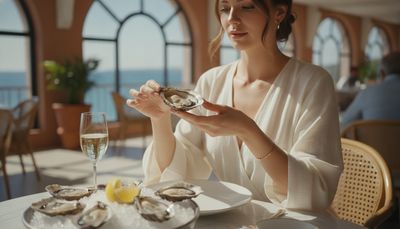
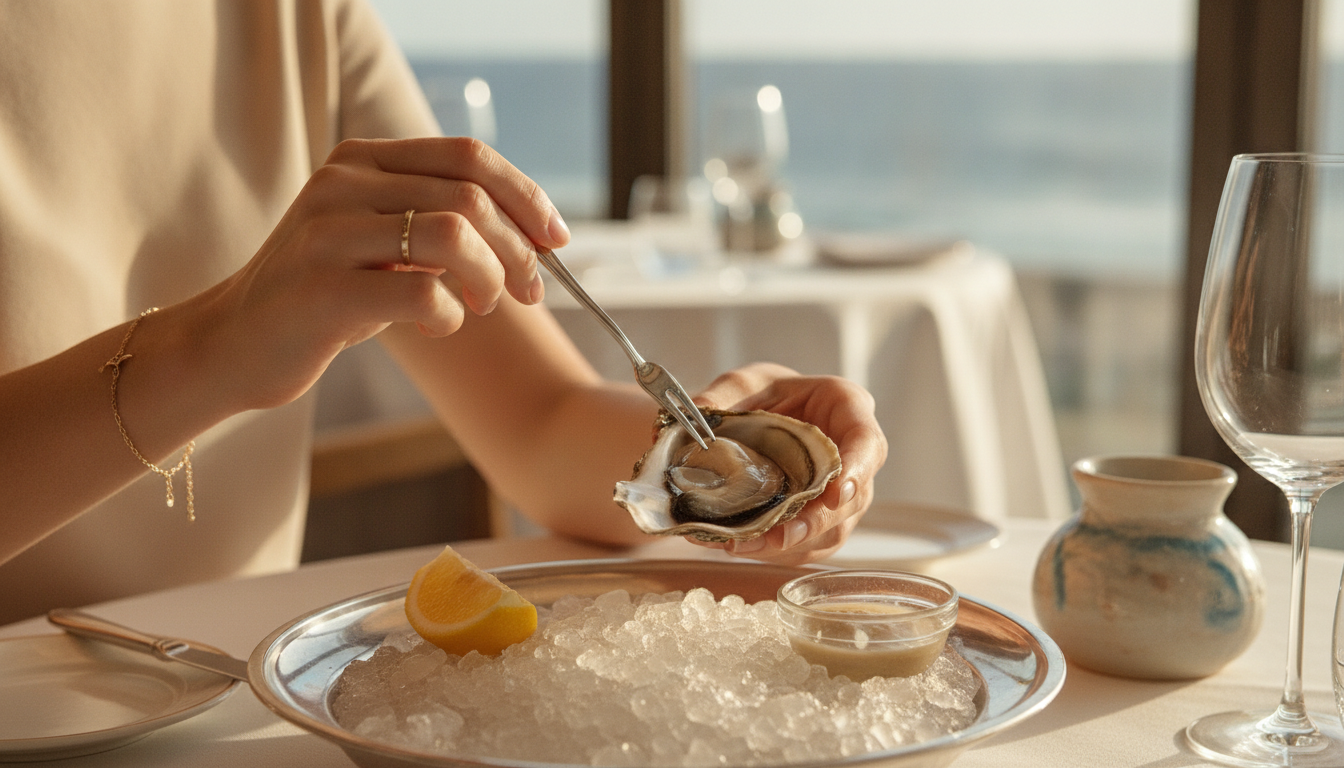
In most upscale restaurants, the oysters will already be opened and served on ice. Still, you should know the proper order. First, gently loosen the oyster from the shell with the small fork – a soft cut underneath the muscle is enough. Then pick up the shell, bring it to your mouth and let the oyster slide in with its natural seawater. Chewing is allowed, even encouraged. That's the only way the delicate flavors of salt, iodine and sometimes a slight nutty note come through.
Lemon is optional, not obligatory. Personally, I only squeeze a tiny splash onto very bold varieties like the Fines de Claire. With more delicate oysters like the Speciales, acidity would mask the nuances. An alternative is Champagne mignonette – a mix of finely chopped shallots, white wine vinegar and pepper, served at good seafood restaurants like Gosch Sylt or the fish restaurant Die Insel in Berlin-Wannsee.
What You Should Avoid
Never cut the oyster into small pieces with cutlery. That's considered impolite and ruins the texture. Loud slurping is also a no-go, even if it's tolerated in some coastal restaurants. On an elegant dinner date, restraint counts. If you're unsure, take your cue from your companion or ask discreetly – good table manners on a first dinner date build trust and show interest in a shared culture of enjoying good food.
Seafood Tasting Tips for Beginners
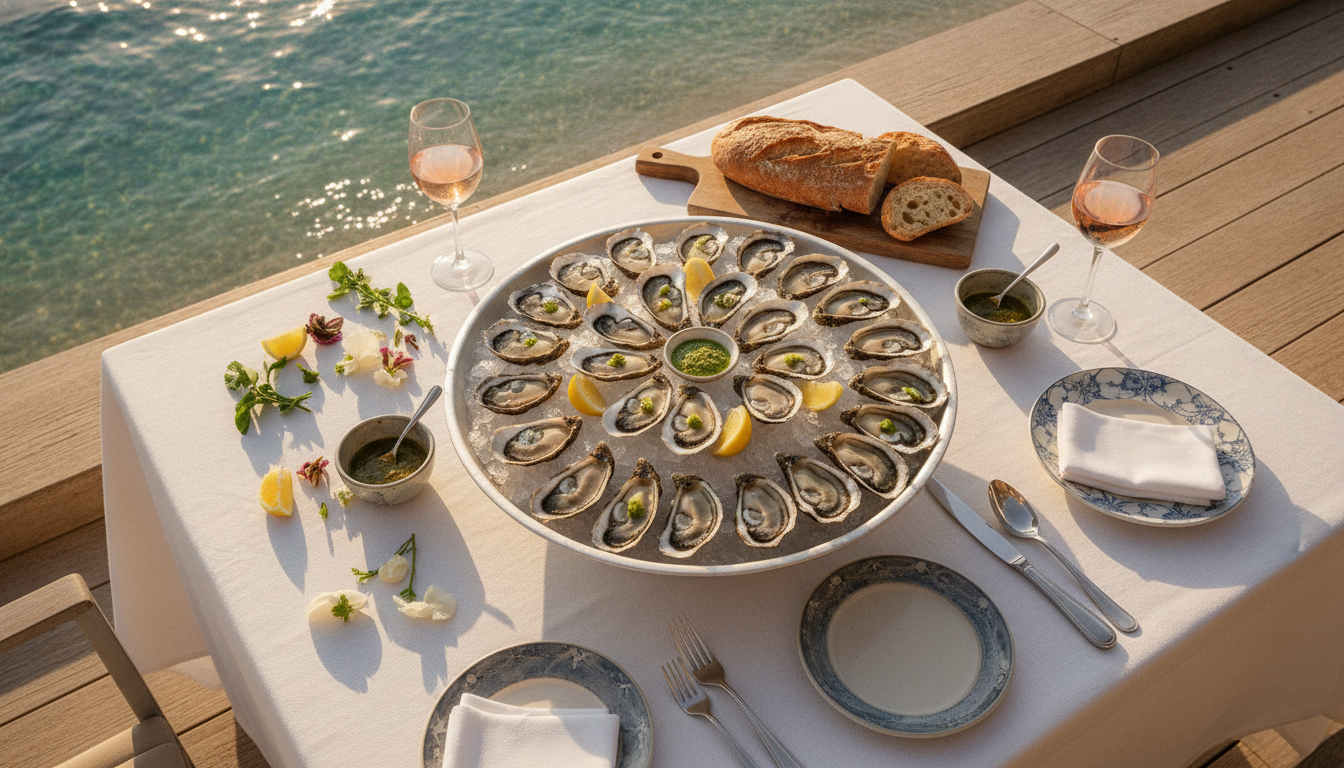
A full seafood tasting is like a little trip around the world on a plate. Besides oysters, you'll often find langoustines, scallops, jumbo shrimp and sometimes even sea urchin or percebes – Spanish goose barnacles, which are among the most expensive seafood in the world and can cost up to $100 per pound.
The Right Order for a Tasting
Always begin with the milder flavors and work your way up to the more intense ones. A typical sequence looks like this:
- Oysters: start with a delicate variety like Sylter Royal, then work up to bold Belons
- Prawns or shrimp: lightly grilled with garlic and parsley
- Scallops: briefly seared, caramelized on the outside, juicy inside
- Langoustines: pull the meat out of the shell with your fingers
- Lobster: as the crowning finale, classic with butter and lemon
At the restaurant The Table in Hamburg, where I had a six-course seafood tasting last fall, sorbet intermezzos were served between courses – for example a cucumber-dill sorbet or a lemongrass-lime ice. These cleanse the palate and prepare it for the next level of flavor.
Handling the Different Types of Seafood
Scallops are eaten with knife and fork, using the knife only to cut them. With langoustines, you can use your fingers – a finger bowl with lemon water is normally provided for that. Lobster is served differently depending on the preparation: if it's already shelled, you reach for cutlery. If it comes in the shell, you'll get special crackers and picks. Don't hesitate to ask for help or have someone show you how to open the shell correctly. Genuine interest comes across as more charming than fumbling around unsure.
Champagne and Oyster Pairing Rules
The combination of Champagne and oysters is legendary, but not every Champagne suits every oyster. As a general rule, the mineral character and acidity of the Champagne should complement the salty freshness of the oysters, not mask it. A Brut Nature or Extra Brut with little dosage goes perfectly with bold oysters, while a Blanc de Blancs made from pure Chardonnay pairs ideally with more delicate varieties.
During a visit to the Champagne bar Bellini in Munich, I learned a rule of thumb: the creamier the oyster, the fuller-bodied the Champagne can be. A slightly more mature Champagne with brioche notes goes with Gillardeau or Marennes, a young, zesty one with Sylter Royal. Alternatives to Champagne are a dry Muscadet from the Loire region or a Chablis Premier Cru – both bring enough acidity and minerality to carry the delicate flavors of the sea.
According to a 2022 survey by the French polling institute IFOP, 68 percent of French oyster lovers prefer Champagne as an accompaniment, followed by white wine at 24 percent. Even though France is the oyster nation par excellence, it's worth looking beyond the plate: in Japan, oysters are traditionally paired with sake, which is an exciting alternative for adventurous food lovers.
Which Seafood to Order on a First Dinner Together
A first meal together should combine enjoyment and ease. Oysters are bold, but not everyone's first choice. If you're not sure whether your date appreciates seafood, start with an appetizer like grilled jumbo shrimp or a scallop ceviche. These dishes are approachable and elegant, and they show you care about quality without taking too much of a risk.
If you're both adventurous, I recommend a restaurant with a plateau de fruits de mer – a large tiered tray with various types of seafood that you share. That creates a relaxed atmosphere and gives you something to talk about. In Berlin, the restaurant Lutter & Wegner on Gendarmenmarkt offers such platters starting at around 65 euros (roughly $70) for two people, including oysters, shrimp, langoustines and whelks.
What matters is that you communicate honestly. If you're still a beginner yourself, it's fine to admit it. Discovering something new together brings people closer. I've had some of my best encounters at wine tastings abroad, where we guided each other through unfamiliar flavors – exactly this principle works with seafood, too.
Where to Find the Best Seafood Tastings
Germany now has excellent addresses for seafood fans. On the North Sea coast, Sylt and Hamburg are hotspots. The Sylt oyster farm in List offers guided tours with tastings from April to October – you learn on the spot how oysters are farmed and try them fresh from the tidal flats. In Hamburg, it's worth visiting the Fischereihafen-Restaurant, where fresh catch from the auction halls is prepared daily.
Paris, of course, remains the queen of oyster cities. The Brasserie La Coupole in the Montparnasse district has served oysters in an Art Deco setting since 1927. The Rungis market halls, south of Paris, are also worth an early trip – from 5 a.m. you can watch how Europe's finest seafood is traded.
If you're looking for something extraordinary, head to Galway in Ireland. The annual Galway International Oyster and Seafood Festival at the end of September draws crowds with oyster-eating contests, masterclasses and live music. In 2023, over 20,000 visitors came to taste the best Irish oysters. A trip there combines culinary enjoyment with cultural experience – much like what I appreciate about speakeasy bars in Europe, where atmosphere and quality go hand in hand.
Frequently Asked Questions About Oyster Etiquette and Enjoying Seafood
How can I tell if an oyster is fresh?
A fresh oyster smells like the sea, never fishy or musty. The shell should be tightly closed or close immediately when touched. The meat must be plump and glossy, and the surrounding liquid clear. If the oyster is served already open, make sure it's on ice and that the meat still moves slightly when you tap it.
Do I really have to eat oysters raw?
No, oysters can also be baked, poached or fried. Classics include oysters Rockefeller – baked with spinach, Pernod and breadcrumbs – or Japanese kaki furai, breaded and deep-fried oysters. Eating them raw is considered the purest form, though, because it's the only way to experience the subtle differences of terroir. If you're unsure, start with a cooked version and work your way up.
What do I do if I don't like an oyster?
Stay polite and discreet. Set the oyster aside and take a sip of water or Champagne. You don't have to eat anything you're not comfortable with. At a good restaurant, you can also quietly ask for an alternative. Oysters are a matter of taste, and nobody will judge you for it. It took me years to learn to appreciate sea urchin – taste develops.
How many oysters should I order at a tasting?
Three to six oysters per person are plenty as an appetizer. For a pure oyster tasting with different varieties, you can count on nine to twelve. What matters is that you try different qualities and regions. In France, people often order in sets of three – one mild, one medium, one bold variety. That gives you a feel for the range.
Can I prepare oysters and seafood at home, too?
Absolutely, but make sure you use the best quality. Only buy oysters from trustworthy suppliers, ideally with proof of origin. They should be transported chilled and eaten within two days. To open them, you'll need a special oyster knife and a bit of practice – YouTube tutorials help. Alternatively, some fishmongers offer to shuck the oysters for you on the spot. Shrimp, scallops and mussels are easier and can be prepared beautifully with white wine, garlic and herbs.
My Personal Takeaway: Elegance Meets Enjoyment
Oyster etiquette and seafood tastings are far more than rules and techniques. They're an invitation to celebrate the moment, embrace something new and enjoy together. Since that evening at Le Dôme, I've collected countless seafood experiences – from rustic shrimp grills on the beach in Cascais to elegant seven-course menus in Copenhagen. Every time, I've learned that it's not about perfection, but about curiosity and openness.
The next time you go to an upscale dinner, be bold. Try the oyster you don't know yet. Ask the sommelier to recommend the right Champagne. And if something goes wrong – say a langoustine flies across the table – laugh about it. Those very moments make an experience unforgettable. Elegance doesn't mean stiffness, but the ability to move through life with ease and style.
Whether you're going on a culinary adventure alone or planning a special date, seafood provides the perfect setting for intense moments of enjoyment. And who knows, you might discover not only new flavors, but also new sides of yourself and of the person sitting across from you.