Mindfulness Rituals for Travel: Finding Balance in Foreign Cultures

Reading time: 11 minutes
Last November, I was sitting in a tiny temple in Kyoto's Higashiyama district, surrounded by 300-year-old cedars and the scent of sandalwood, when it hit me: mindfulness while traveling isn't an escape from everyday life, it's the most direct path to yourself. The monks at Kennin-ji Temple begin every morning at 5:30 a.m. with Zazen meditation, and I had the privilege of joining them twice. That experience changed my entire approach to travel.
In a world where we spend an average of 4 hours a day on social media (according to the Statista Digital Market Outlook 2024), truly being present has become rare. Especially when we travel and our senses are flooded anyway, we need anchors of calm. The good news: foreign cultures often offer centuries-old mindfulness practices that we travelers can tap into.
Why Mindfulness Matters More Than Ever When You Travel
Travel means stimulation. New smells, languages, flavors, sounds. That's enriching, but it can also be overwhelming. A 2023 study by the Technical University of Munich found that 42% of long-haul travelers report mental exhaustion after returning home, even though they "took a vacation." The reason is often that we change location but bring our inner restlessness along.
I've experienced this myself: on my first trip to Southeast Asia, I rushed through five countries in three weeks. All I was left with was 2,847 photos and a feeling of emptiness. On my second trip, I spent three weeks in Bali alone, meditated daily and deliberately visited only a few, but intense, places like the Tirta Empul Water Temple in Tampaksiring. The difference was huge.
Meditation Abroad: How I Practice in Foreign Cultures
Practicing meditation in foreign cultures doesn't mean you need years of experience or have to sit in the lotus position for hours. It's about presence. In Thailand, I joined a 30-minute beginner meditation session at Wat Pho in Bangkok. The monks there offer free sessions in English every day at 9:00 a.m. and 3:00 p.m.
What I learned there: breathing is universal. The Thai monks taught me the Anapanasati technique, in which you simply observe your own breath. No app, no frills. Just me, my lungs and the moment. I've used this technique ever since wherever I travel, whether on a plane, in the crowded market of Marrakech or on the beach in Tulum in the morning.
My Routine for Meditating on the Road
I've developed a fixed routine that I've followed on every trip for two years now. In the morning, before I check my phone, I sit down for 15 minutes. That might be on the hotel bed, on a balcony or in a park. In Lisbon it was the Miradouro de Santa Catarina overlooking the Tagus, in Marrakech the quiet courtyard of my riad in the Mellah district.
The basic rule is simple: find a spot where you won't be disturbed too much. Set a timer for 15 minutes. Close your eyes. Count each breath up to ten, then start over at one. If your thoughts wander – and they will – that's completely normal. Gently return to your breath. After two weeks of daily practice, you'll notice a real difference in your inner balance.
Cultural Mindfulness Practices That Changed the Way I Travel
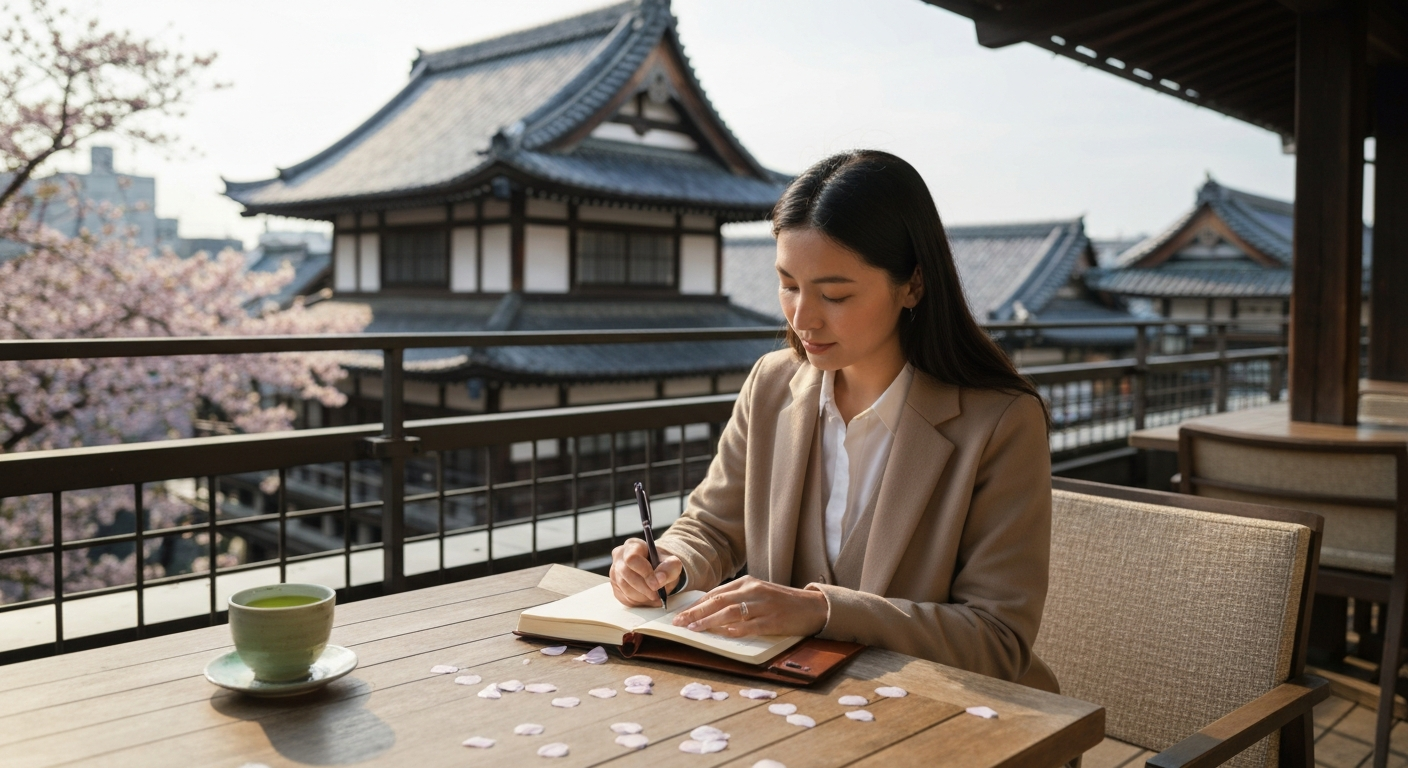
Every culture has its own ways of cultivating mindfulness. In Japan, it's the tea ceremony. In Uji, south of Kyoto, I took part in a traditional matcha ceremony. The tea master, Keiko-san, explained to me that every movement – from heating the water to scooping the powder to drinking – is deliberate and precise. A ceremony takes 45 minutes. 45 minutes for just one cup of tea. Sounds long? It was the most intense mindfulness experience of my life.
In Morocco, I discovered the hammam tradition. At Les Bains de Marrakech in the Kasbah district, I spent three hours on ritual washing, steam baths and rest. Moroccans don't see a hammam visit as a wellness gimmick, but as spiritual purification. According to a 2023 survey by the Moroccan Ministry of Tourism, 78% of locals visit a hammam at least once a month for mental relaxation.
Walking Meditation in South Korea
I found an especially accessible practice in South Korea: walking meditation as part of the Temple Stay programs. At Haeinsa Temple in Gyeongsang Province, I joined a two-day program. Between 6:00 and 7:00 a.m., the monks led us onto a forest path where we walked in complete silence. Every step deliberate, feeling the sole of your foot touch the ground.
The advantage of this practice is that you can fit it in anywhere. I now practice walking meditation regularly: strolling through Borough Market in London, climbing up to the Acropolis in Athens, walking along the beach in Portugal. The trick: slow your pace by 50%, focus on each individual step and breathe consciously in rhythm with your steps.
Finding Inner Balance: My Practical Strategies for the Road
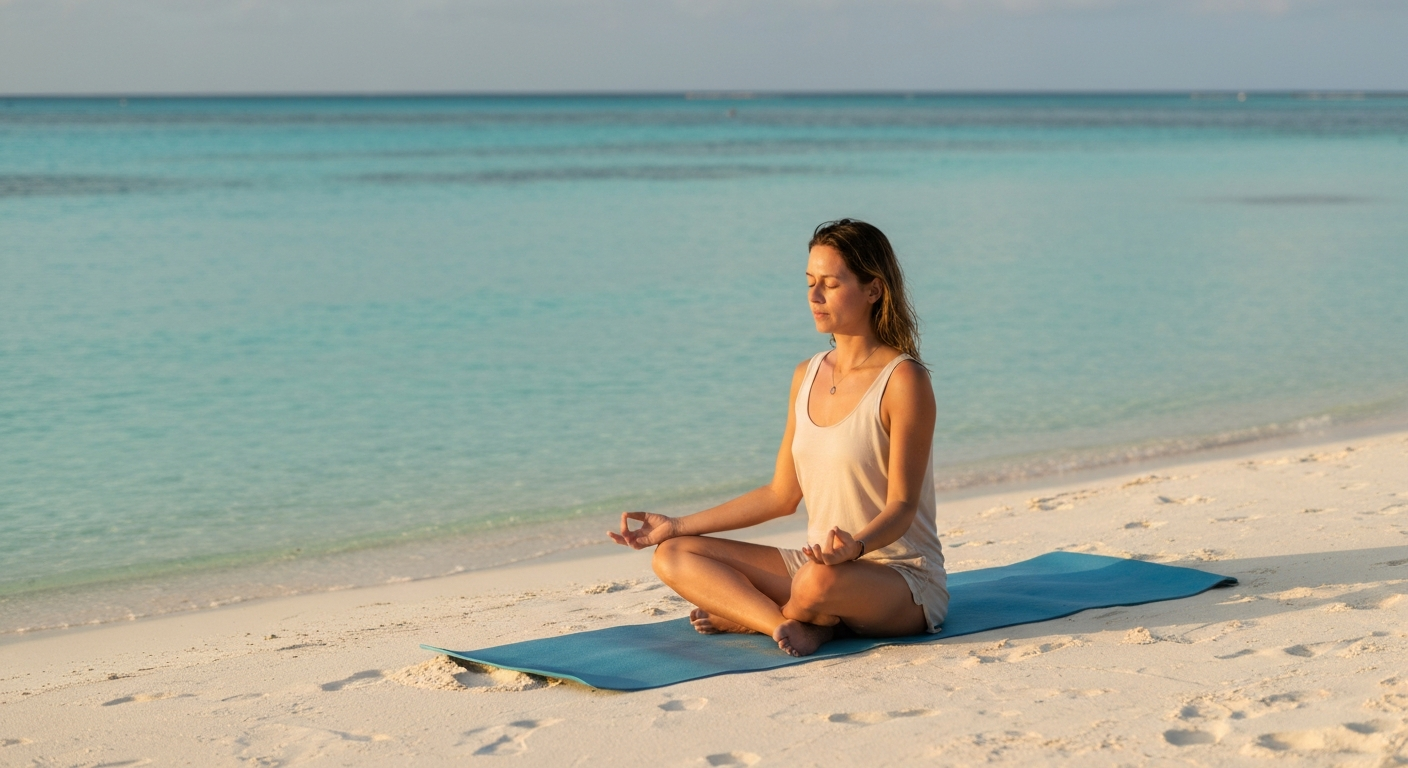
Keeping your inner balance abroad also means setting boundaries. I deliberately schedule "empty time." When I arrive in a new city, I block off the entire first afternoon. No sightseeing, no restaurant planning. Just arriving, maybe an aimless walk, maybe journaling in my hotel room.
In Buenos Aires, I spent my first afternoon simply sitting in a café in Palermo Soho, drinking mate and watching people – at Café Tortoni on Avenida de Mayo 825, to be precise. Those three hours without an agenda did more for my mental health on the road than any perfectly planned sightseeing tour.
Digital Detox as a Mindfulness Ritual
One of my non-negotiables: I check my phone for 30 minutes at most each morning and evening. In between, it stays in airplane mode or in the hotel safe. At first it felt like withdrawal. After three days? Liberating. Suddenly I notice details: the way light falls through palm leaves, conversations at the next table, the taste of freshly baked bread at a market in Provence.
According to a 2023 study by the University of Vienna, cutting screen time to under 2 hours a day during vacation trips increases perceived recovery quality by 64%. The numbers speak for themselves.
How I Bring Mindfulness Rituals From Different Countries Into My Daily Life
The beautiful thing about cultural mindfulness practices: you can take them home with you. Since my trip to Japan, I practice a shortened version of the tea ceremony every day. Each morning I take 10 minutes for my matcha. I prepare it with the same care Keiko-san showed me: heat the water to exactly 176 °F (80 °C), add two scoops of powder with a bamboo scoop, and whisk with the chasen bamboo whisk in an M motion until a fine foam forms.
I've built Korean walking meditation into my daily commute. Instead of headphones and a podcast, I walk deliberately and in silence twice a week. 20 minutes in which I only walk and breathe. Sounds mundane? It changes your entire energy for the day.
If you're looking for special experiences to find inner balance, you'll also find wonderful opportunities in a wellness vacation for singles to get closer to yourself while meeting interesting people at the same time.
Staying Mentally Healthy on Long Trips: My Survival Tips
On longer trips, especially when you're on the road for several months, you need structure. I spent six months in South America and learned this: flexibility is great, but routine is healing. My non-negotiable daily rituals were:
- 15 minutes of meditation right after waking up
- Journaling for 10 minutes before bed, writing down three things I'm grateful for
- Eating at least one meal a day mindfully and without my phone
- 30 minutes of movement, whether yoga, swimming or walking
- One full day a week without social media
These five points sound simple, but they were my anchor. In Cusco at 11,200 feet (3,400 meters), where I was struggling with altitude sickness, these rituals helped me stay grounded. In Rio during Carnival, when the whole city was in a state of controlled chaos, they gave me structure amid the madness.
The Importance of Community for Mental Health
Mindfulness doesn't necessarily mean solitude. Sometimes I find inner balance precisely through connecting with others. In Ubud, Bali, I visited the Yoga Barn, a community center that offers up to 15 different yoga and meditation classes every day. There I met other travelers who shared similar values. We started a small group that met every morning at 6:30 a.m. for meditation together.
This kind of connection – based on shared values rather than superficial small talk – was incredibly nourishing. According to the World Happiness Report 2024, social connection is one of the five main factors in life satisfaction, including, and especially, when traveling.
Similar experiences can also happen on yoga trips for singles, where like-minded people come together and work on their inner balance side by side.
Mindfulness in Unexpected Moments: When Travel Becomes Meditation
The most intense moments of mindfulness often happen unplanned. On a packed chicken bus in Guatemala, squeezed in between locals, chickens and market bags, I decided to be present instead of annoyed. I closed my eyes, felt the vibrations of the old bus, smelled the mix of diesel, fresh fruit and sweat, and listened to the blend of Spanish conversations and salsa music from the radio.
That 90-minute ride from Antigua to Chichicastenango became one of the most vivid meditations of my life. Not despite the chaos, but because of the chaos. Mindfulness doesn't mean creating perfect conditions. It means accepting every condition as perfect.
In Varanasi, India, on the Ganges, where I experienced the Aarti ritual at sunset, surrounded by thousands of people, ringing bells, chanting and the smell of incense, I found a similar presence. Dashashwamedh Ghat at 6:00 p.m. is not a place of silence, but it is a place of intense spiritual energy. There I understood: mindfulness has many faces.
Practical Tools and Apps I Actually Use
I'm generally skeptical about too much technology in mindfulness practice, but a few tools have proven their worth. I use the Insight Timer app for guided meditations when I can't settle down on my own, such as after long flights or in noisy hostels. It offers over 130,000 free meditations in 45 languages.
One simple but effective tool is my physical travel journal. Not a digital diary, but a handwritten notebook. The Moleskine I've carried on every trip for three years is now full of sketches, thoughts, pasted-in tickets and notes. Writing by hand activates different areas of the brain than typing and encourages reflection.
An unusual but effective method: every evening I photograph one detail of the day that touched me. Not for Instagram, just for me. A flower, a shadow, a door, a hand. This exercise forces me to look consciously every day. My collection now includes over 600 such pictures from 23 countries.
Frequently Asked Questions About Mindfulness on Trips
How do I find time to meditate when my itinerary is packed?
The question isn't how to find time, but how to set priorities. In my experience, 15 minutes of meditation in the morning make me more productive and present, so I use the rest of the day more efficiently. Start with just 5 minutes right after waking up, before you even get out of bed. Sit up in bed, close your eyes and breathe. Those 5 minutes are possible no matter how full your day is. After a week, you can build up to 10, then 15 minutes.
Do I have to join organized meditation retreats, or can I practice on my own?
Both have their value. Retreats like the Vipassana center at Dhamma Pajjota in Thailand offer intensive 10-day silent meditation experiences and are ideal for going deeper. But the most valuable practice is the one you do every day, even if it's just 10 minutes alone in your hotel room. I've done both and found that daily self-practice is more sustainable than the occasional retreat. Start with what's accessible – your breath, here and now.
Which cultural mindfulness practices can I respectfully adopt as a traveler?
Respect starts with understanding that you're a guest, not a consumer. If you take part in a ceremony or practice, learn about its meaning and rules beforehand. At Wat Pho in Bangkok, for example, there are clear dress rules: shoulders and knees must be covered, and shoes are taken off. Always ask whether photography is allowed. Treat sacred places with the same reverence as the locals. Take part because you have genuine interest, not because it's a cool Instagram moment. People in every culture can sense authenticity.
How do I bring mindfulness into hectic travel situations like airports or crowded markets?
Mindfulness is most valuable in chaotic situations. My technique for airports: I find a quiet corner at the gate, put on headphones but without music, and close my eyes for 10 minutes. In crowded markets, I practice "single-sense focus": I consciously concentrate on just one sense, say 2 minutes of only listening, then 2 minutes of only smelling. That reduces sensory overload and brings me back to the moment. The important thing is not to see chaos as the enemy of mindfulness, but as a place to practice.
Can I use mindfulness practices on short weekend trips too?
Absolutely, and I'd even say especially then. On short trips, we tend to squeeze out every minute and come back more stressed than when we left. My approach for weekend trips: I plan a maximum of one main activity per day and leave the rest open. 15 minutes of meditation in the morning, 10 minutes of journaling in the evening. This structure gives me more rest than a jam-packed 48-hour program. Quality over quantity applies to travel, too.
My Personal Takeaway: Mindfulness as a Travel Companion
After five years of mindful travel, I can say one thing for certain: the places I go are no longer what matters most. What matters is how I travel. Whether I'm on the road with open senses and an open heart, or just ticking off sights.
The mindfulness rituals I learned in Japan, Thailand, Morocco and South Korea are now a fixed part of my everyday life. They taught me that travel doesn't mean escaping yourself, but meeting yourself. In foreign cultures, I find not only new places, but new facets of myself.
The next time you travel, here's my invitation: take 15 minutes of stillness every day. Try a local mindfulness practice. Switch off your phone and just be there. The most valuable souvenirs you'll take home aren't photos or trinkets, but moments of deep presence and inner balance that will nourish you for years to come.